
If you’ve noticed your sleep isn’t quite what it used to be — you’re waking up earlier than you’d like, tossing and turning more, or just not feeling as rested as you once did — you’re not imagining it, and you’re not alone.
Sleep changes are one of the most common, and most misunderstood, parts of aging. The good news? Most of what you’re experiencing is a normal part of getting older, not a sign that something is wrong. The key is knowing the difference between “normal” and “worth a conversation with your doctor.”
Why Sleep Changes as We Age
Our sleep architecture — the pattern of light, deep, and REM sleep we cycle through each night — naturally shifts with age. Starting in our 50s and 60s, many people spend less time in deep, restorative sleep and more time in lighter stages. That means it’s easier to wake up from small disturbances: a noise, a partner shifting, a full bladder, or simply a passing car outside.
Our internal body clock also tends to shift earlier. According to the National Institute on Aging, “…older people tend to go to sleep earlier and get up earlier than they did when they were younger.” This is why so many people over 50 notice they’re naturally sleepy earlier in the evening and wide awake before sunrise. It’s not insomnia — it’s often just a recalibrated clock.
Hormonal changes play a role too, especially during and after menopause, when dropping estrogen and progesterone can disrupt sleep and contribute to night sweats that interrupt rest.
What’s Considered Normal Sleep
• Waking up once or twice a night and falling back asleep within a few minutes
• Going to bed and waking up earlier than you did in your 30s or 40s
• Slightly less total sleep time, especially if you still feel rested during the day
• More awareness of your sleep — noticing the transitions between stages more than you used to
None of these, on their own, are cause for concern. They’re simply part of how sleep evolves. Put together, however, and sleep issues can add up to trouble. In fact, researchers in Psychosomatic Medicine write, “Short sleep and insomnia are each associated with a greater risk of age-related disease, which suggests that insufficient sleep may accelerate biological aging.”
What’s Worth a Closer Look
Some patterns are less about normal aging and more about underlying issues that deserve attention:
• Regularly waking up gasping or feeling like you can’t catch your breath — this could point to sleep apnea, which becomes more common with age and is linked to heart health.
• Persistent daytime exhaustion, even after what should be a full night’s sleep.
• Racing thoughts or anxiety that keep you from falling back asleep once you wake.
• Restless legs or an urge to move your legs that disrupts your ability to fall or stay asleep.
• Sleep that has changed dramatically and suddenly, rather than gradually over years.
If any of these sounds familiar, it’s worth talking with your doctor. Many of these issues are very treatable once identified — but they’re often missed because people assume trouble with sleep is just “part of getting older.”
Small Habits That Can Make a Real Difference in Improving Sleep
Solving sleep problems can seem overwhelming. For a lot of people, just thinking about “fixing my sleep” can create more anxiety about sleep, and it’s a vicious cycle. You’re anxious about sleep, the anxiety keeps you from sleeping, you lie in bed thinking about how bad you’ll feel without sleep, and on it goes.
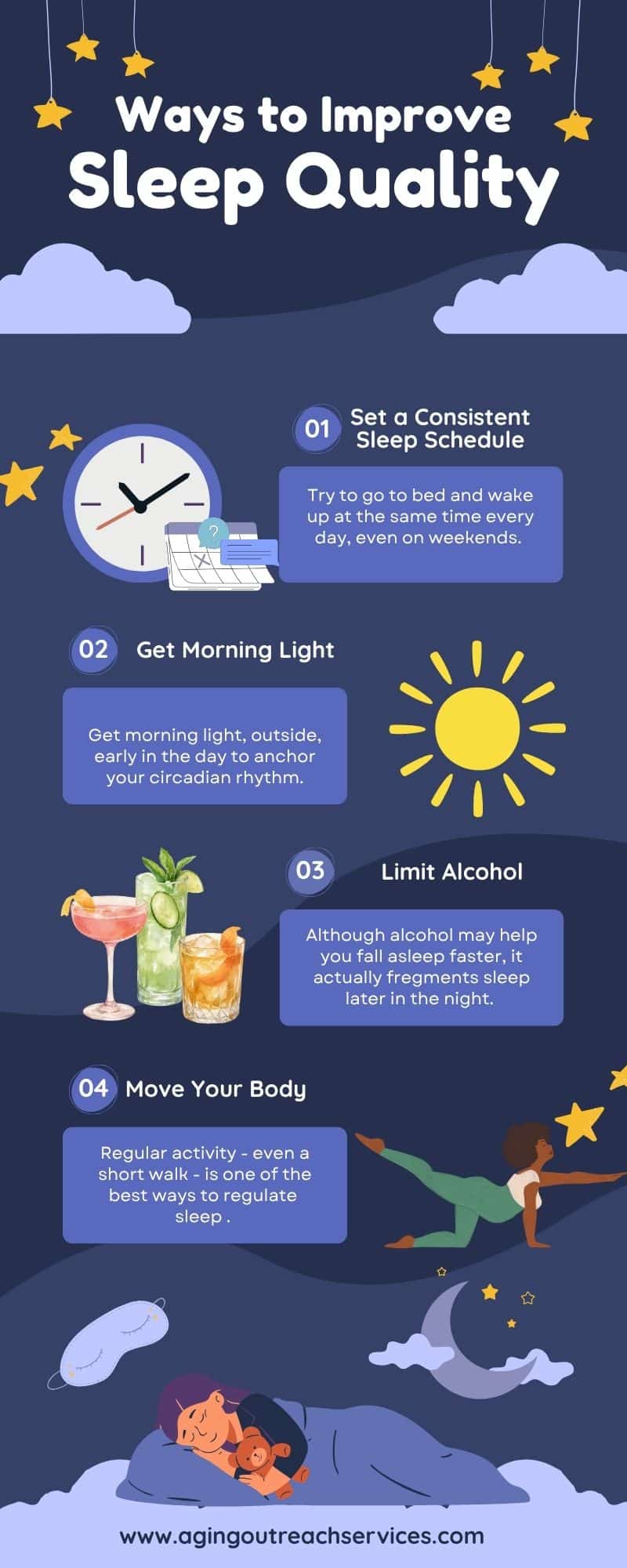
There’s good news, though. You don’t need a complete overhaul to sleep better. Research shows that a few habits tend to have an outsized positive impact on sleep quality:
• Keep a consistent wake time, even on weekends. This does more for your body clock than a consistent bedtime.
• Get natural light exposure early in the day. Morning light helps anchor your circadian rhythm.
• Limit alcohol in the evening. It may help you fall asleep faster, but alcohol tends to fragment sleep later in the night.
• Keep your bedroom cool. Body temperature naturally drops to initiate sleep, and a cooler room supports that process.
• Move your body during the day. Regular activity — even a daily walk — is one of the most reliable ways to improve sleep quality.
The Bottom Line on Healthy Sleep as We Age
Sleep after 50 looks different than it did in your 20s or 30s, which is normal. Most of our life looks different after 50 than it did in our early adult years. The goal isn’t to chase the sleep you used to have — it’s to understand what’s normal, stay alert to what’s not, and build habits that support the sleep your body needs now.
In this month’s newsletter, OutreachNC, we’ll dig deeper into specific sleep therapies and how sleep affects brain health and aging. Stay tuned.
You May Also Like:
New Research: Sleep and Heart Health
Sleep Tips for Seniors: Rest Better, Age Healthier
3 Habits of Cognitive SuperAgers: Keeping Your Mind Sharp as You Age
Get Our Newsletter
Navigating life after 50 can be complex for you and your loved ones. We're here to help with tips, advice, and answers to questions. When you sign up for our newsletter, we'll let you know by email when we publish new articles that can help you.